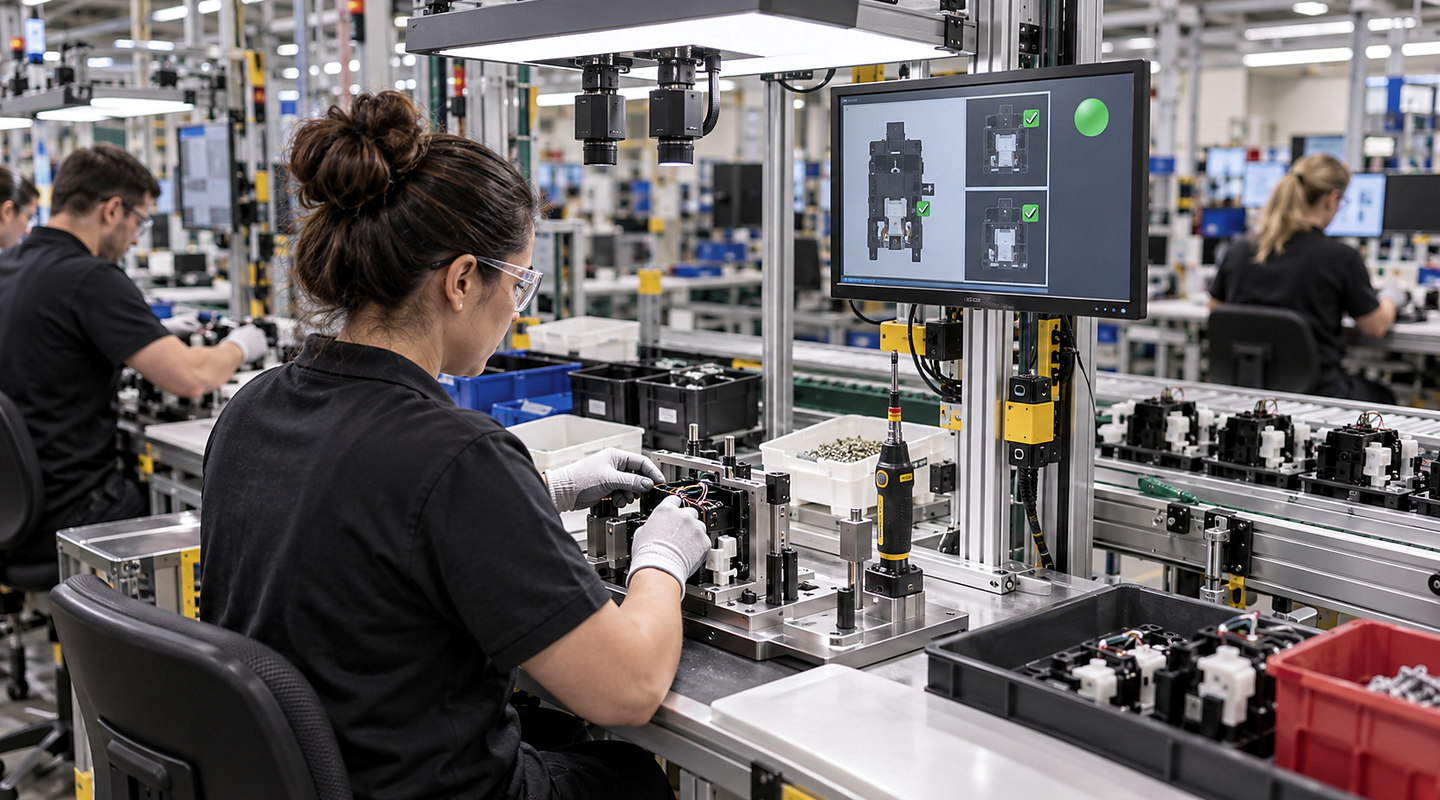
Plan multi-variant checks for transparent parts around representative good, bad and marginal samples under real line presentation, line connections, operating limits, acceptance checks and next steps.
In brief
For multi-variant checks for transparent parts, start with representative good, bad and marginal samples under real line presentation and your full operating sequence, then check the credible optical, product, defect and line-speed extremes before committing to a final layout.
Plan transparent part inspection around representative good, bad and marginal samples, line presentation, lighting, reject handling and challenge criteria. Discuss an optical feasibility trial with Oxford Vision Systems.
On the production floor
Plan for the conditions your team handles every day — Transparent Part Inspection
Plan transparent part inspection around representative good, bad and marginal samples, line presentation, lighting, reject handling and challenge criteria. Discuss an optical feasibility trial with Oxford Vision Systems. For multi-variant checks for transparent parts, the deciding details include visible defect or measurement definition for inspection of transparent components, part presentation and production speed and false-accept, false-reject and challenge criteria.
Details worth resolving early for multi-variant checks for transparent parts
Question 1
Visible Defect or Measurement Definition for Inspection of Transparent Components
For multi-variant checks for transparent parts, describe the current position, required outcome, acceptable limits and known exceptions for visible defect or measurement definition for inspection of transparent components. That lets us compare options against your real production rather than one nominal value.
Question 2
Good, Bad and Marginal Sample Range
For multi-variant checks for transparent parts, describe the current position, required outcome, acceptable limits and known exceptions for good, bad and marginal sample range. That lets us compare options against your real production rather than one nominal value.
Question 3
Part Presentation and Production Speed
For multi-variant checks for transparent parts, describe the current position, required outcome, acceptable limits and known exceptions for part presentation and production speed. That lets us compare options against your real production rather than one nominal value.
Question 4
Optics, Lighting and Environmental Conditions
For multi-variant checks for transparent parts, describe the current position, required outcome, acceptable limits and known exceptions for optics, lighting and environmental conditions. That lets us compare options against your real production rather than one nominal value.
Question 5
Recipe, Reject and Line-Control Interfaces
For multi-variant checks for transparent parts, describe the current position, required outcome, acceptable limits and known exceptions for recipe, reject and line-control interfaces. That lets us compare options against your real production rather than one nominal value.
Question 6
False-Accept, False-Reject and Challenge Criteria
For multi-variant checks for transparent parts, describe the current position, required outcome, acceptable limits and known exceptions for false-accept, false-reject and challenge criteria. That lets us compare options against your real production rather than one nominal value.
Your operating cycle
Plan for more than automatic running
Include replenishment, normal production, planned change, short stops, fault recovery, cleaning and maintenance for multi-variant checks for transparent parts. A fast automatic step can still leave your team with a slow or awkward overall process.
Normal production and variant changes
Replenishment and material presentation
Operator access and safe interventions
Cleaning, maintenance and recovery
Prove the result
Test multi-variant checks for transparent parts against representative good, bad and marginal samples
Normal production
Run the agreed product or part mix for multi-variant checks for transparent parts at your intended operating pattern.
Difficult conditions
Include credible extremes for visible defect or measurement definition for inspection of transparent components and good, bad and marginal sample range.
Fault and recovery
Show how the proposed solution detects a problem affecting multi-variant checks for transparent parts, responds safely, informs your team and restarts under control.
Important limits
Be clear about what the trial has shown
A camera can only assess a property made visible and repeatable by the inspection setup.
Sample diversity and marginal cases determine how meaningful a feasibility result is.
Visual inspection does not replace hidden, destructive, functional or statutory tests.